


In recent years, earth-conscious consumers have become much more interested in learning about where the food they’re eating comes from. For savvy carnivores, that includes the processes by which farmed livestock is raised and processed.

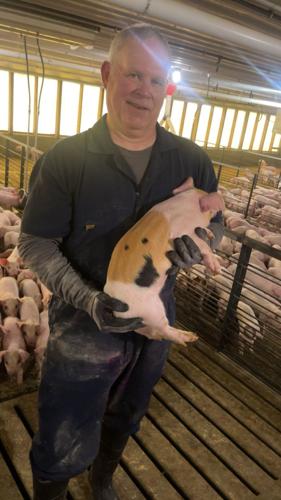
Walt Traudt, Nebraska Pork Producers Association board member
“Sustainability isn’t a new concept; it’s generational and it goes way beyond just the environment,” said Walt Traudt, a board member of the Nebraska Pork Producers Association. “It’s about doing what’s best for the people, the pigs and the planet.”
A study titled “Retrospective Assessment of U.S. Pork Production: 1960-2015” indicates that, in terms of sustainable practices, the pork industry has been on an upward trajectory for years.
“This research shows that in the past six decades, sustainability in pork production has improved, using 75% less land, 25% less water, 7% less energy and 8% less carbon emission,” Traudt said. “Our sustainability journey is based on the ‘We Care’ six ethical principles — our people, food safety, public health, environment, communities and animal welfare.”
Traudt and his fellow Nebraska pig farmers tend to equate sustainability with good stewardship, land conservation and operational efficiency, with many now documenting their data to improve these and other crucial aspects of the industry. For instance, Traudt recently took part in a study where he and other participants provided anonymous data about farm sustainability to a third-party contractor. The data was then aggregated and results were shared with the National Pork Board to help inform and guide future decisions, recommendations and guidelines.
“Our landlords and their heirs also appreciate us documenting our data,” Traudt added. “This process makes them feel proud to own land that has a positive effect on the environment.”
Through the study, Traudt learned a great deal about greenhouse gas emissions and how to reduce his farm’s carbon footprint. He’d already put some full-circle practices into use when he added pigs to his Clay Center-based corn and soybean farm 10 years ago in an effort to diversify the operation, such as applying organic micronutrient-rich hog manure to his fields for fertilization, and then using the corn raised to feed his pigs.

“After harvesting the corn, we plant soybeans for the following year, which also go to feed the pigs,” he explained. “So while we’re growing in the fields, we’re also raising pigs that are producing manure for future crops.”
Traudt views sustainability as a journey, not a destination, but feels the pork industry is continuing to make good strides each year in terms of water usage, land conservation and efficient production.
“Our children like to ask why and how; I believe we are in an era of those questions,” he said. “The sustainability reports quantify our practices so family, friends, neighbors and consumers can understand what we are doing to get our products to them. This process of being transparent also sets a standard for the next generation to follow.”
To learn more about the Power of Pork, visit pork.org. Go to nepork.org for information about the Nebraska Pork Producers Association, or porkcares.org for the National Pork Board.